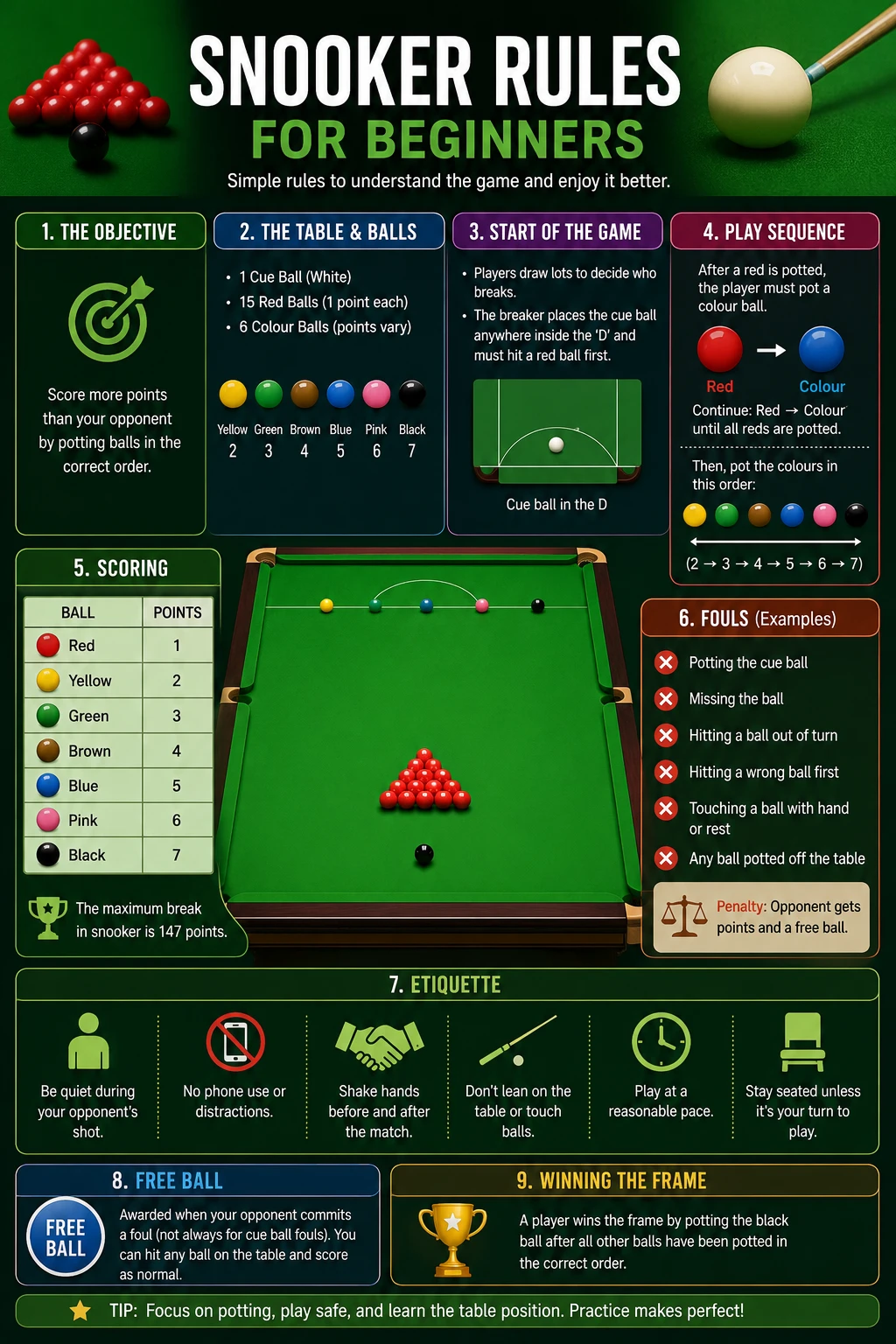


Get an idea about the basic snooker rules that a beginner must know, including potting order, scoring, fouls, "foul and a miss" situation, and the free ball rule. This short guide contains the basic snooker rules for beginners.
Snooker may seem to be complex and incomprehensible in the first place. However, knowing several rules of the game and following them, namely how to pot balls correctly, how to calculate the score, and when to consider the play as foul, makes this game quite clear and comprehensible. These common snooker rules for beginners should help you learn how to play snooker confidently.

You can also refer to SportsBoom: How To Play Snooker For Beginners for additional information about the basic rules and structure of the game.
1. Objectives of the Game
The primary aim in snooker is to score points. Players take turns in potting balls in the proper order. The one who gets the most points is declared a winner. A match consists of a number of frames. So, understanding the objective of the game is a basis for all the other snooker rules for beginners.

2. Balls and Their Values
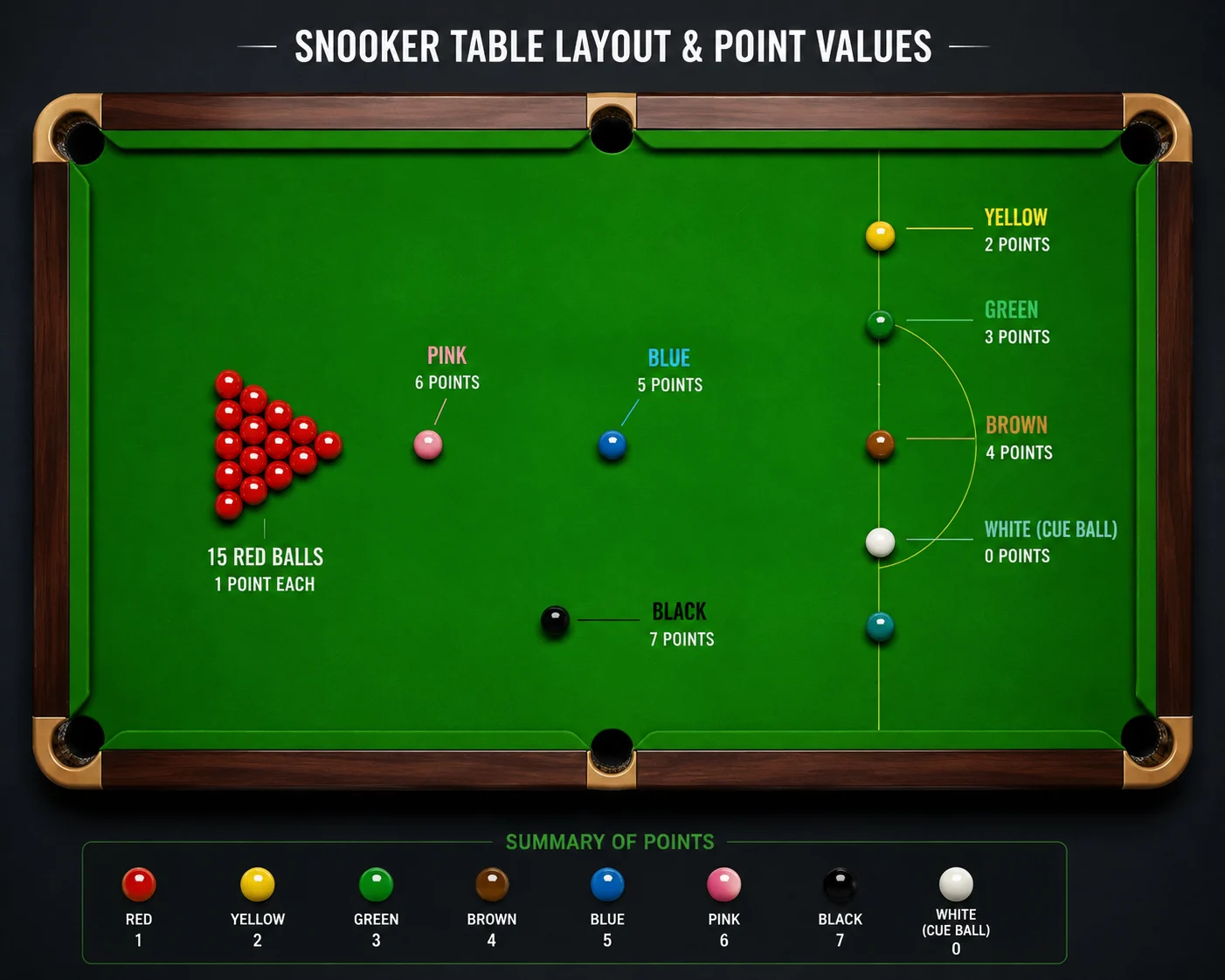
To learn how to play snooker you have to know that the number of balls in a typical snooker game is 22:
- 15 red balls (each 1 point)
- 6 coloured balls:
- Yellow (2 points)
- Green (3 points)
- Brown (4 points)
- Blue (5 points)
- Pink (6 points)
- Black (7 points)
- 1 white ball
It is important to remember these values because they are necessary to understand snooker scoring and penalties for fouls.
For a simple explanation of the balls and their values, see WikiHow: How to Play Snooker.
3. Basic Potting Sequence (Red - Colour - Red - Colour)
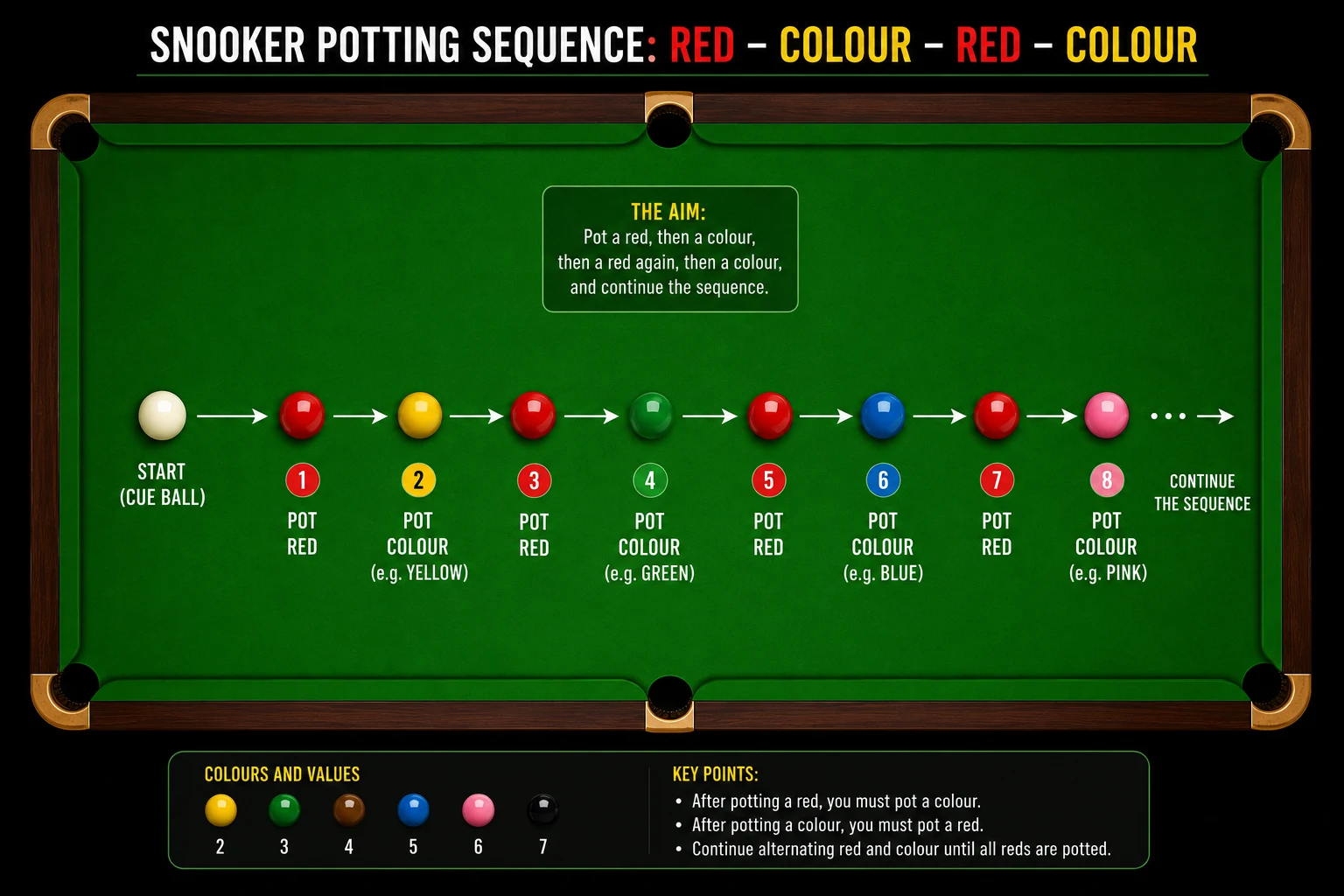
One of the first snooker rules for beginners is related to potting sequence:
- If there are still red balls on the table, you must pot red balls first.
- After that you must nominate and pot a coloured ball.
- The colour ball is re-spotted and you pot another red ball and nominate another colour, etc.
- You must repeat potting red ball – colour ball – red ball – colour ball until you pot all the 15 red balls.
This “red – colour” scheme of potting is a core of how to play snooker and one of the basic snooker rules for beginners.
You can also read SportsMonkie: Snooker Rules Explained for more information about the red–colour sequence.
4. Potting of Coloured Balls When All Reds Are Pottered
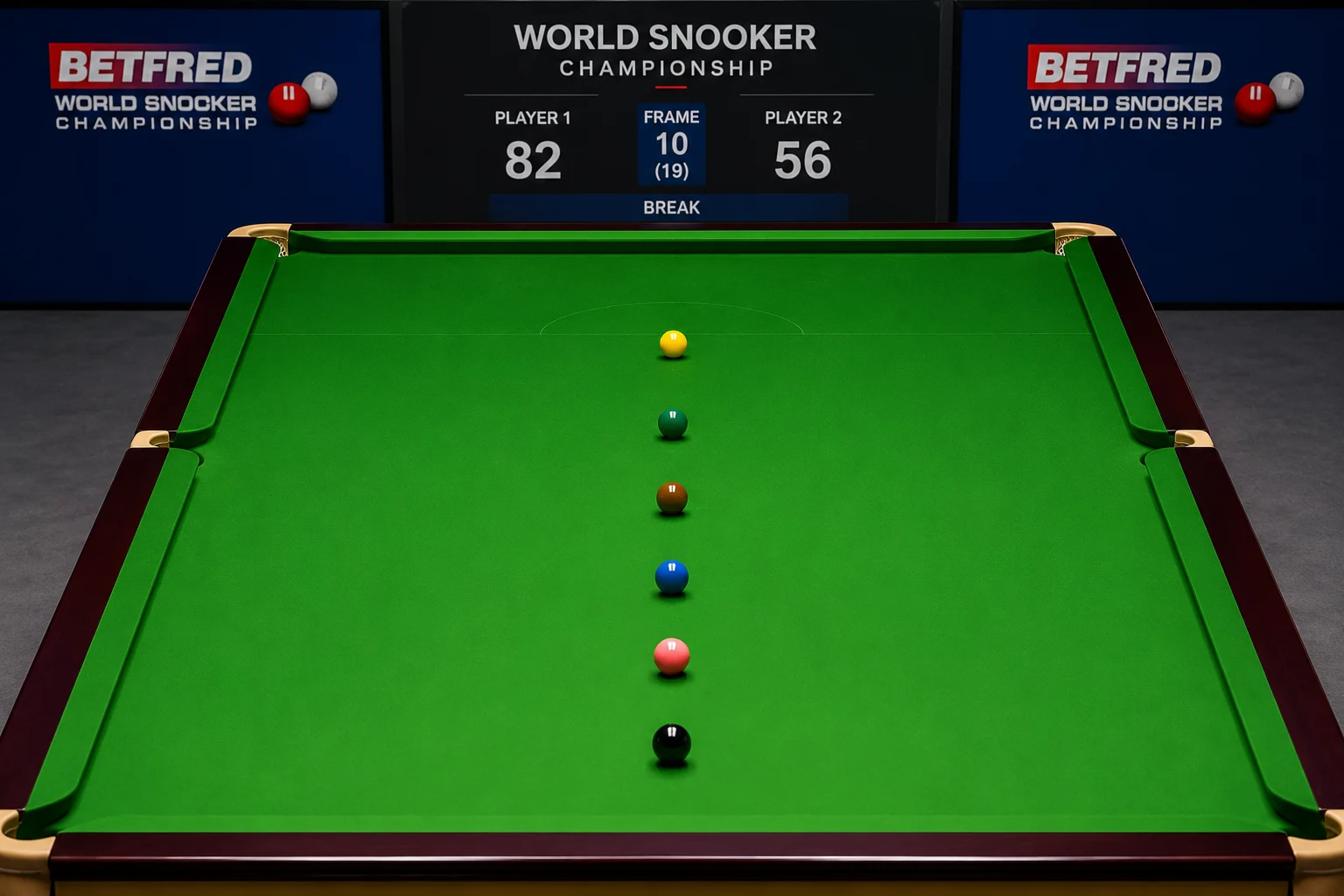
When there are no more red balls on the table, it is required to pot coloured balls in ascending order of their values:
- Yellow → Green → Brown → Blue → Pink → Black
In this case colours are not re-spotted. The one who will score more points after the black ball will win the frame (unless there is a foul or some special circumstances of re-spotting).
This potting sequence is the second core of snooker rules that every beginner has to know.
WikiHow: How to Play Snooker also explains the order of the coloured balls during the final stage of a frame.
5. The Break-Off Shot
Each frame begins with the break-off:
- White ball is placed anywhere in the D (the half-circle at one end).
- First, a red ball has to be struck by the cue ball.
- Players alternate their turns.
Learning this rule correctly is one of the first snooker rules for beginners to learn as illegal break-off is considered to be a foul.
For more information about the opening break, see SnookerFreaks: The Ultimate Snooker Guide For Beginners.

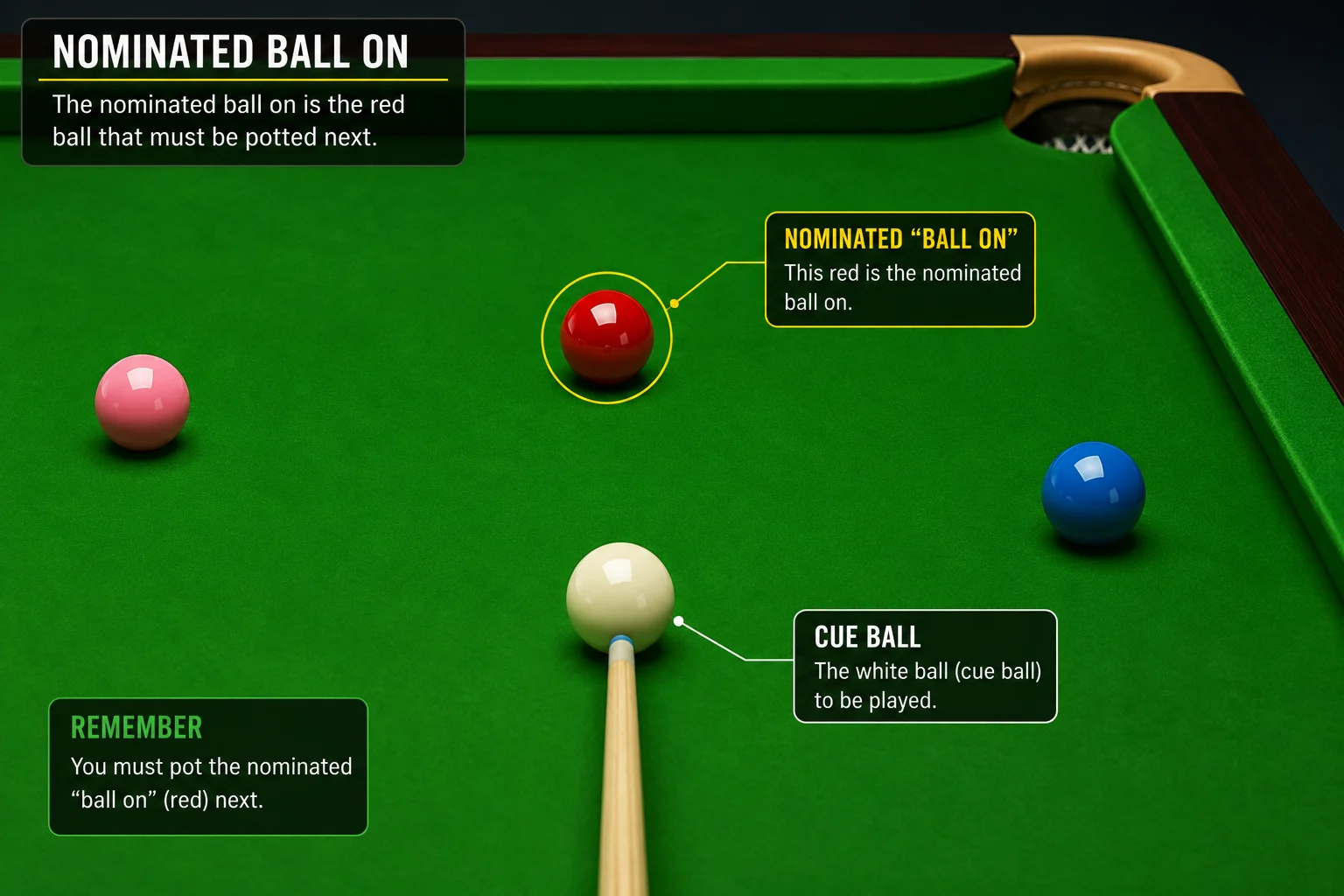
6. Definition of “Ball On”
In the middle of the game you should know which ball is “on”:
- If there are still red balls available on the table, any red ball is “on”.
- After potting a red ball you have to nominate and pot a colour. In this case, the colour is considered to be the ball on.
- After potting all the red balls, colours become “on” in ascending order according to their values.
- You always have to pot the ball on with the cue ball as the first ball. Failing this requirement will be considered a foul. This is one of the common snooker rules for beginners.
For further details about the ball-on rule and fouls, see Rules of Snooker (Canada): Snooker for beginners.
7. Common Fouls and Penalties
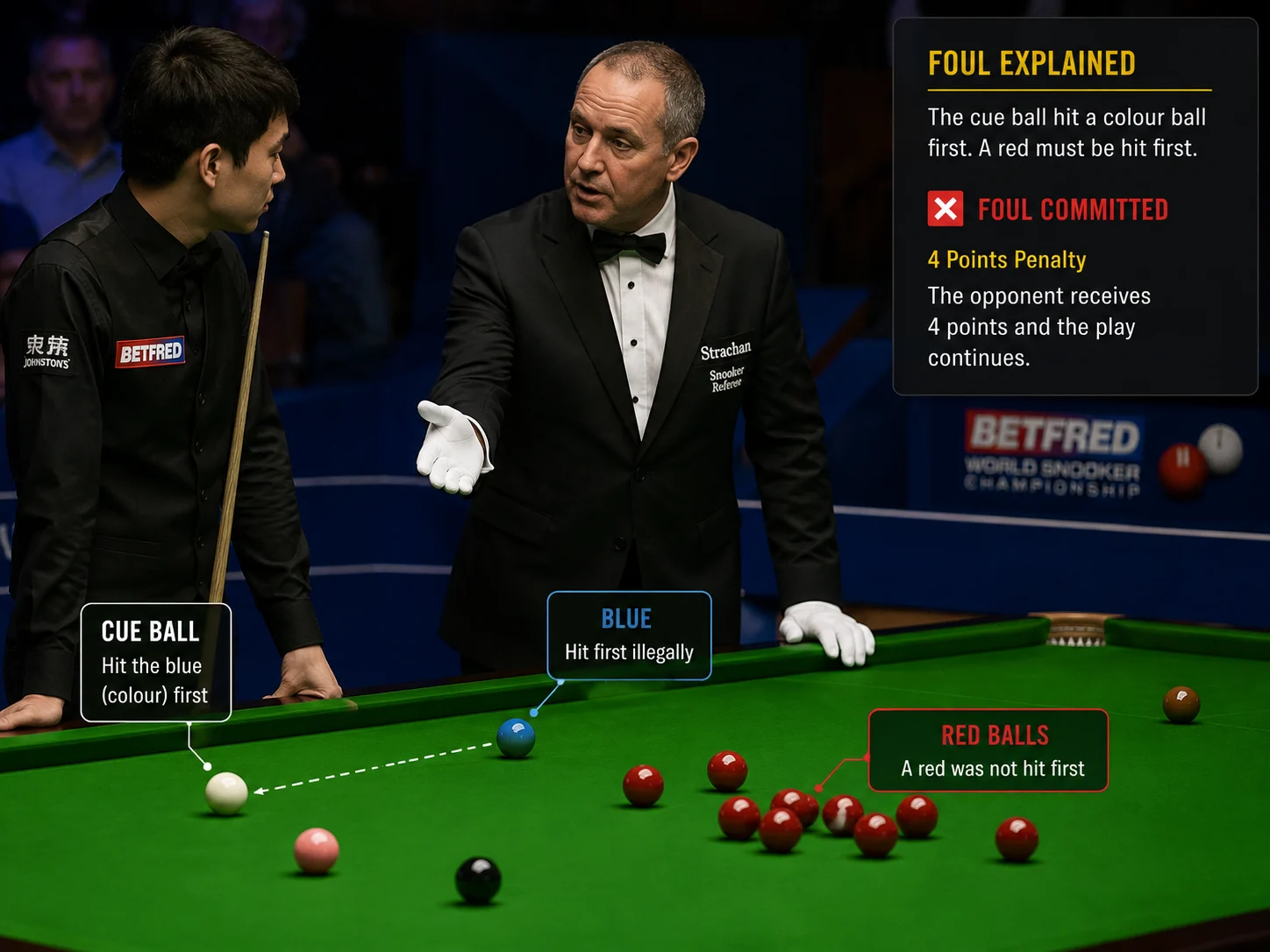
Fouls play a significant role in snooker rules for beginners. In case of committing a foul, the turn is over and points go to the opposite player. The minimum penalty is 4 points, or the value of the ball, whichever is greater (but no more than 7 points for the black ball).
There are several common fouls:
- Hitting none of the balls with the cue ball.
- Hitting the wrong ball first (the ball which is not on).
- Potting the ball which is not on (potting colour when the reds are on, e.g.).
- Poting the cue ball (it is called “in-off”).
- Contacting the balls with your hand, clothes or rest.
- Playing a push shot (keeping the cue tip in contact with the cue ball for too long).
- Jumping a ball.
- Contacting any ball before the balls stop.
This list contains one of the most important snooker rules for beginners to avoid fouls.
For a detailed overview of fouls and penalties, see Pot the Black: Official Snooker Rules.
8. Snooker Scoring
Understanding snooker scoring rules will help you to follow the game and think about your shots:
- You get points when you pot a ball.
- The value of red balls is 1 point; the value of colours is 2-7 points.
- Fouls bring you 4-7 points to the opponent's score depending on the type of the foul committed.
- The one who scores more points by the end of the frame is considered to be the winner.
Understanding the score and calculating the possible amount of points is one of the skills which you need to master after you learn how to play snooker basic rules.
For another overview of scoring and penalties, see WWIN: Snooker rules at a glance.
9. The “Foul and a Miss” Rule

The “foul and a miss” rule is one of the snooker rules for beginners to be learnt later:
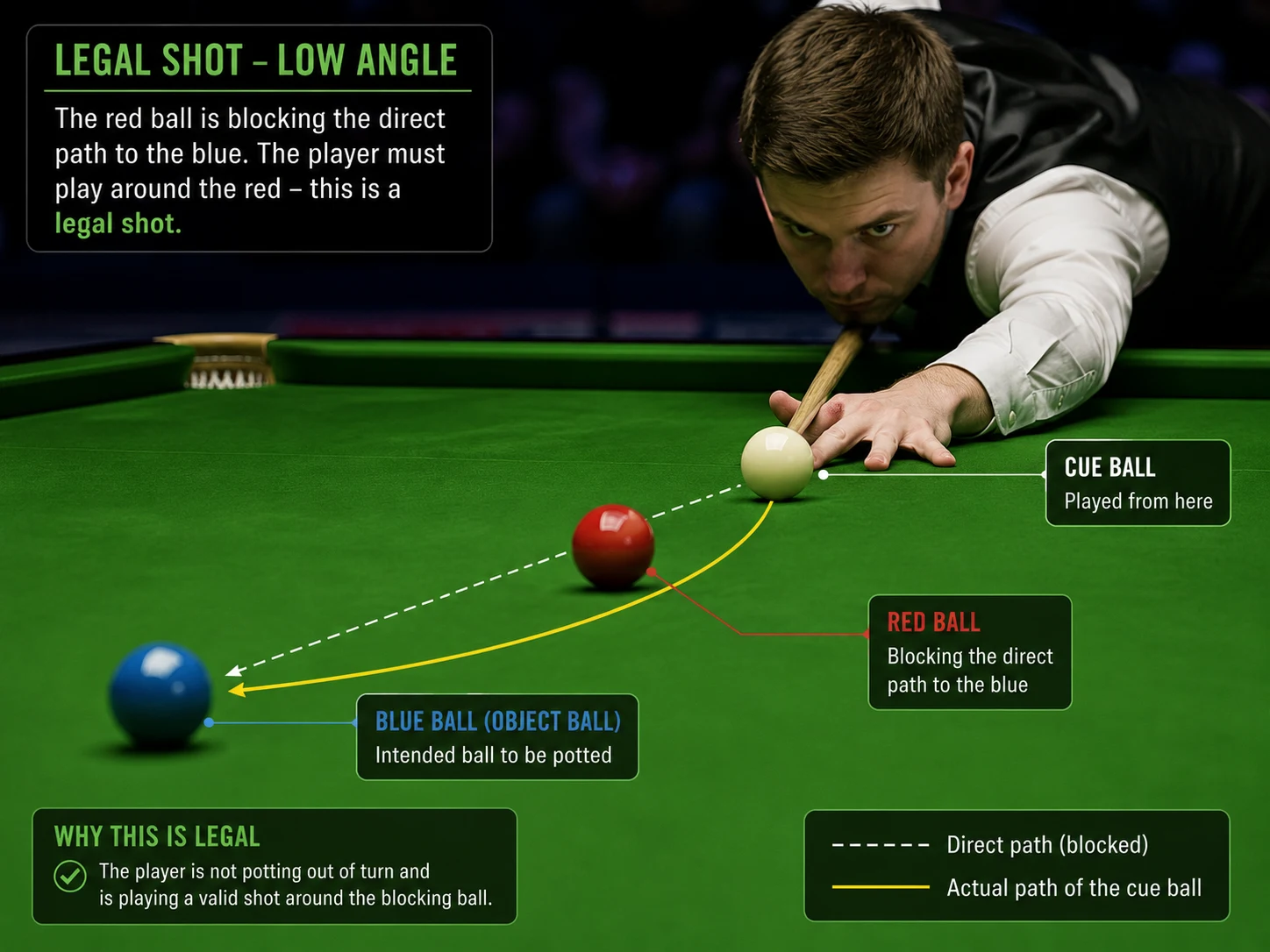
In case you failed to hit the ball on and the referee considers that you did not do your best to hit it, a “miss” is declared.
Then your opponent can choose between two options:
- Playing from the current position.
- Having the balls set in their initial position and forcing you to make a shot again.
This rule prevents the players from failing intentionally to hit the ball on the table in order to gain some advantage. It is known as one of the common snooker rules beginners should know.
For a detailed explanation, see SportsBoom: The Miss Rule Explained.

10. The Free Ball Rule
Free ball rule can be applied after a foul:
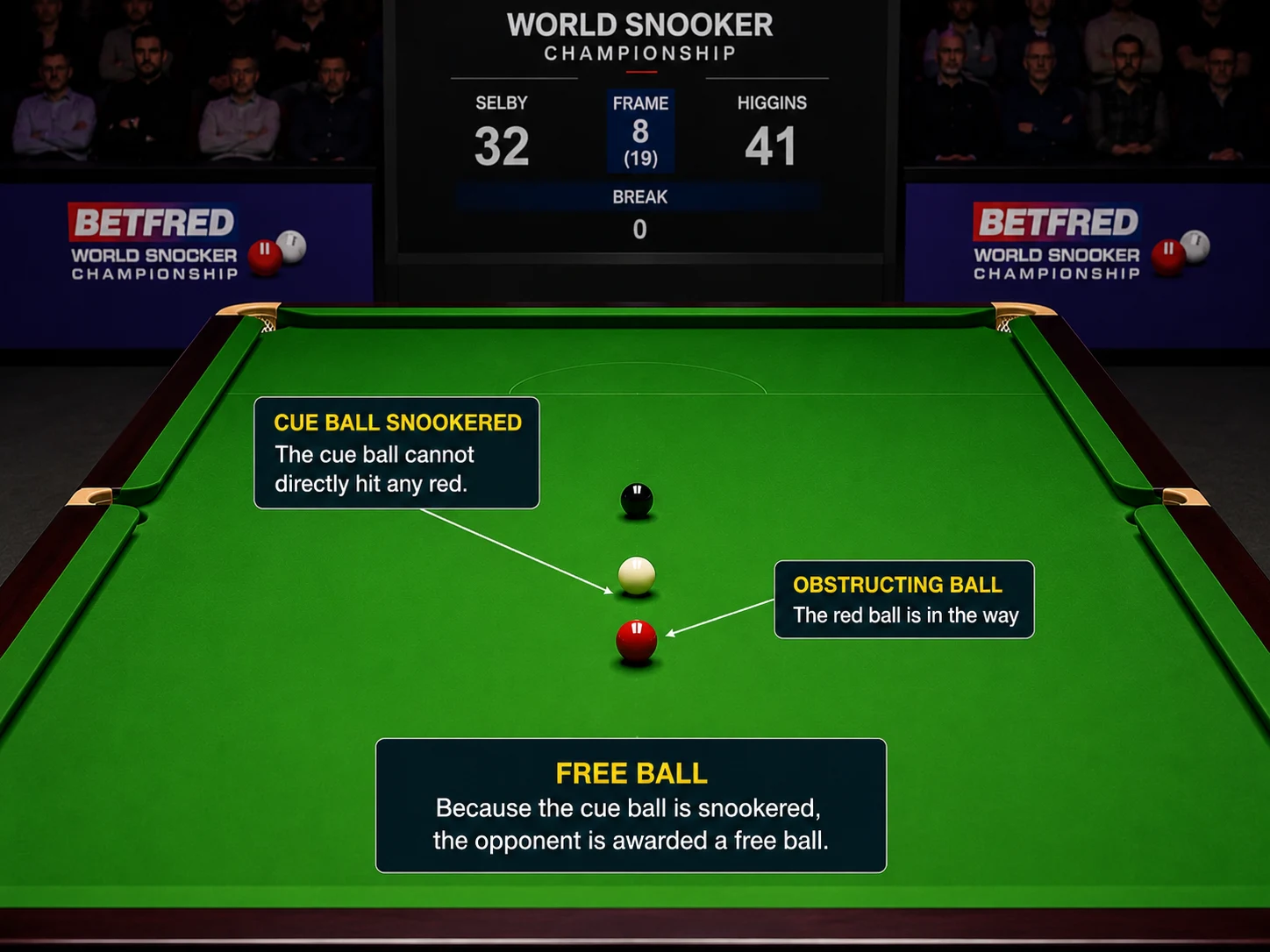
- If your opponent commits a foul and you are snookered on the ball on (you cannot hit both sides of this ball), the referee may award you a free ball.
- You nominate any other ball on the table as the ball on.
- If you pot this free ball, it will be re-spotted and you will score the points equal to the ball which was on before.
It is one of the key rules in difficult situations and is considered to be one of the strategic snooker rules for beginners which may change the outcome of a frame.
For more information, see BBC Sport: What is a free ball in snooker?
11. “Touching Ball” Rule
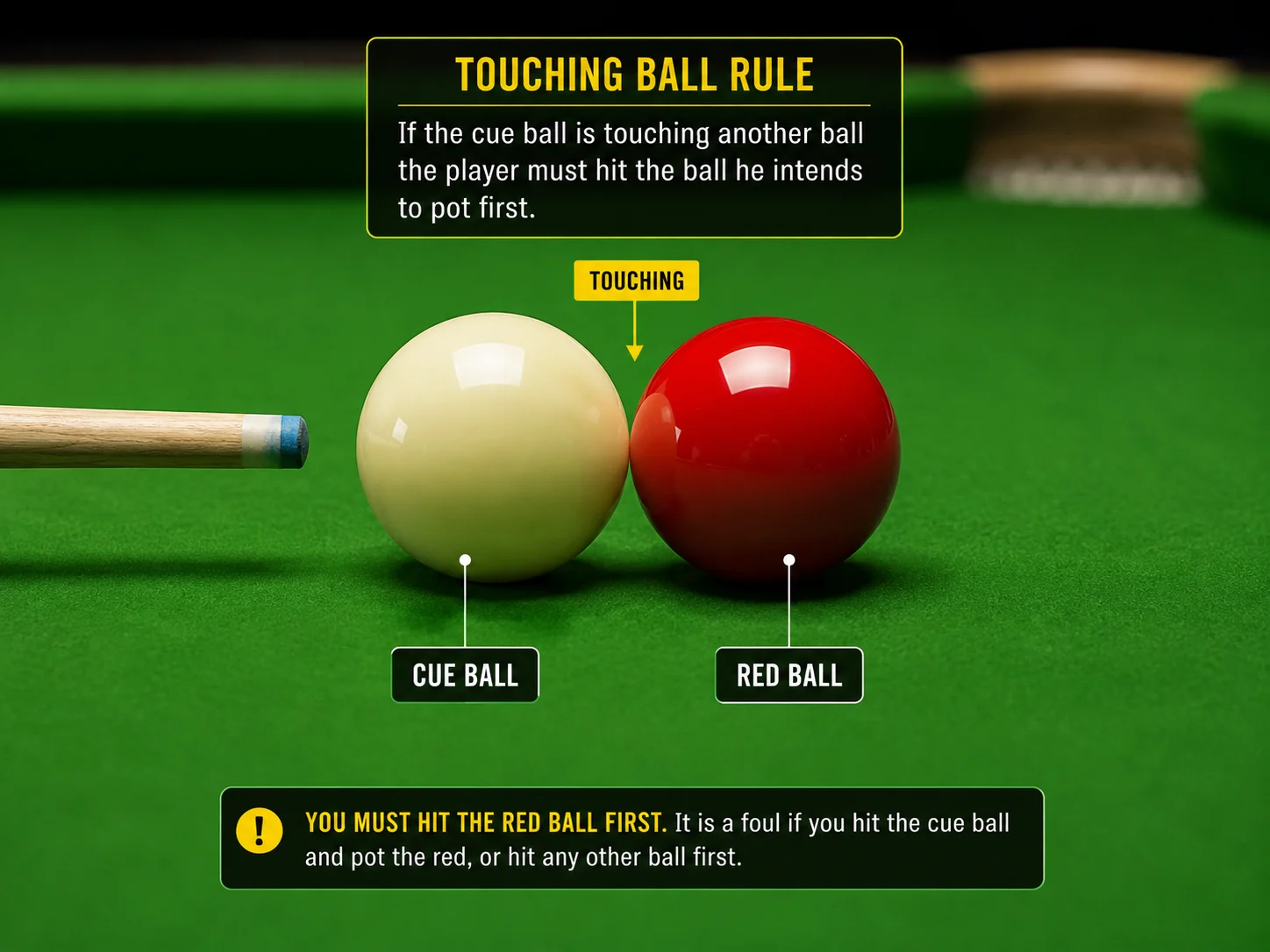
If the cue ball touches another ball at the beginning of your shot:
- Referee will declare “touching ball”.
- You have to play away from this ball without moving it.
- If you move the touching ball, you will commit a foul.
This is one of the specific but common snooker rules for beginners.
For more information about the touching ball rule, see SportsBoom: How To Play Snooker For Beginners.
12. No Jump Shots
Unlike some pool games, jumping shots are prohibited in snooker. If you try to make the cue ball jump over another ball, it is considered to be a foul. This rule is one of the basic snooker rules for beginners.
You can also review Playo Blog: 5 Rules In Snooker That Every Starter Should Know for additional beginner rules.
13. At Least One Foot on the Floor
Taking a shot you have to have at least one foot on the floor. Lifting both of your feet off the floor when hitting the ball is considered to be a foul. This is one of the basic stance-related snooker rules for beginners.

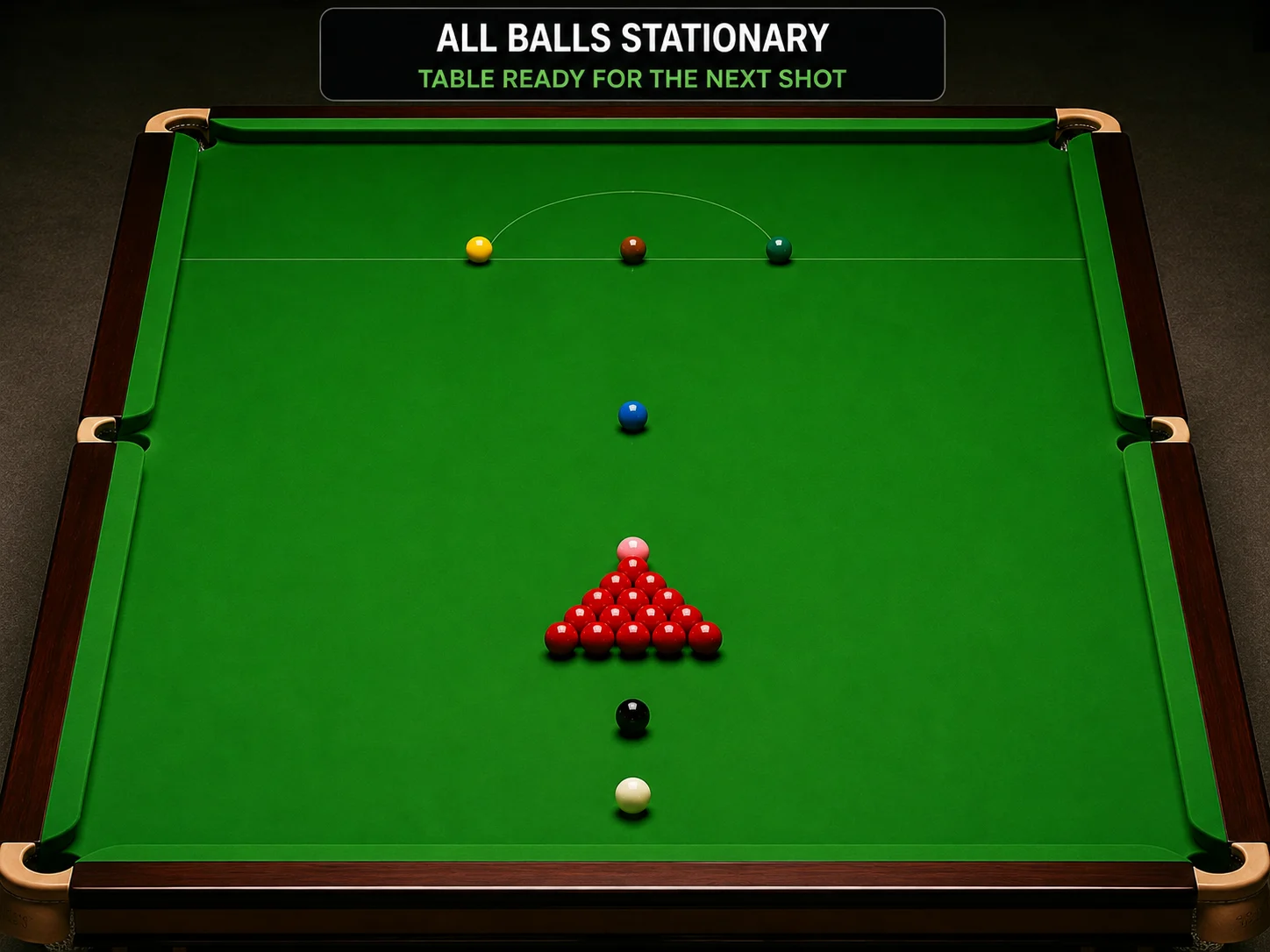
14. All Balls Must be Stationary Before Shooting
You are not allowed to hit the cue ball when any ball on the table is still moving. This is one of the snooker rules for beginners which prevent the game from being unfair.
15. Etiquette and Basic Conduct
Though it is not directly connected with snooker scoring, knowing the basic rules of conduct helps to play smoothly. There are several basic rules of conduct:
- You must not touch the balls except for special cases when a referee orders you to do this.
- You must not lean or stand on the table during the game.
- You must stay motionless and silent while your opponent plays.
- You have to chalk your cue away from the table to avoid dust.
For a beginner-friendly overview of etiquette and basic conduct, see PandaTaps: Snooker Rules for Beginners.

Quick Summary
For beginners, the most important common snooker rules are:
- Pot red → colour → red → colour until you pot all the reds.
- Then pot coloured balls in the order: yellow, green, brown, blue, pink, black.
- Always pot the ball on, otherwise it will be a foul.
- Fouls give 4-7 points to the opponent.
- Learn the basics of “foul and a miss” and “free ball” situations.
- Follow basic conduct rules: have one foot on the floor, do not touch the balls and do not make jump shots.