

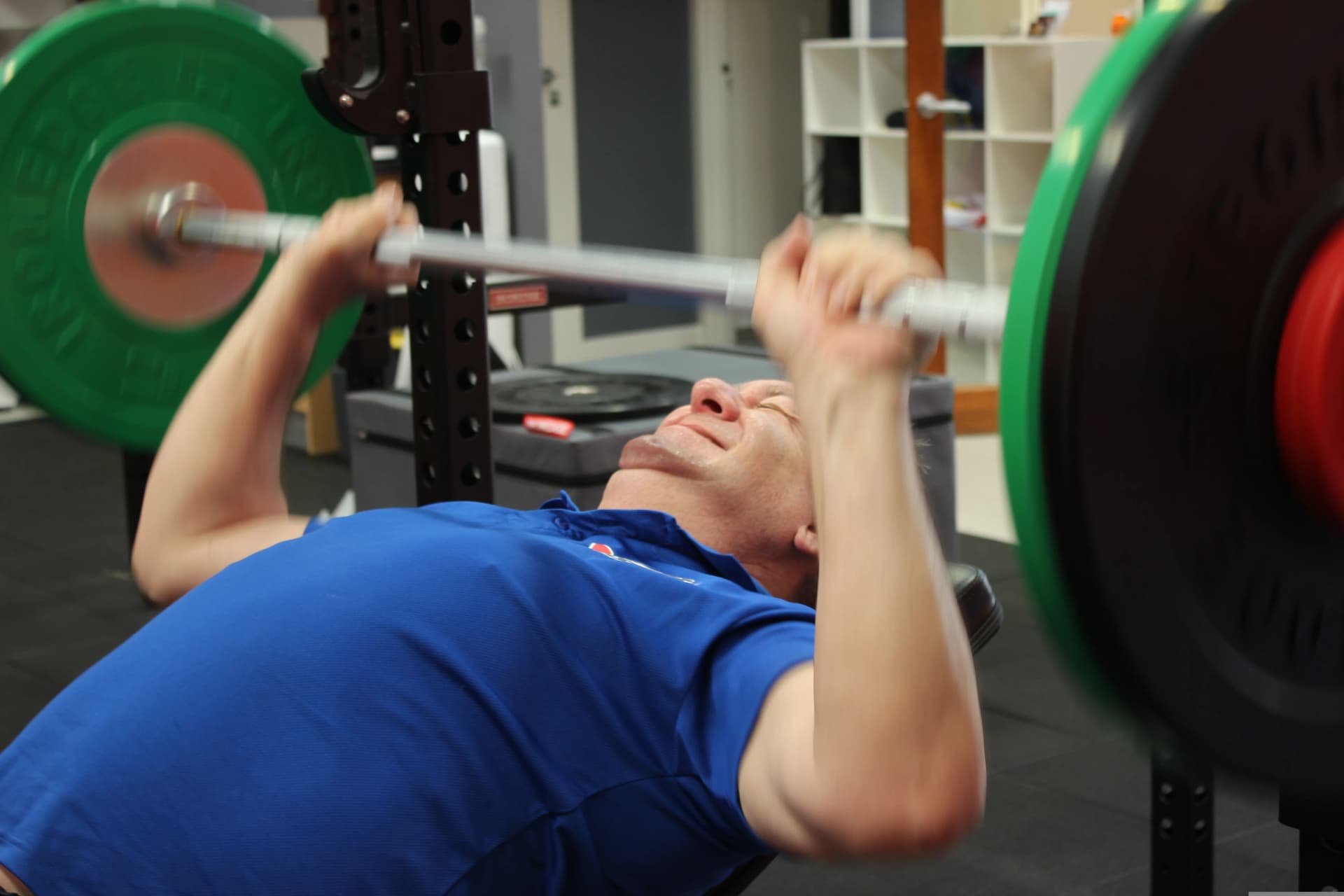
Discover whether incline bench press or flat bench press is better for chest growth. Learn the key differences, muscle activation, best angles, and how to program both for maximum upper and overall chest development.
There is no need to choose between incline and flat bench presses to have a bigger chest. Both exercises are effective and target different sides of the pecs. So here is the thing: use flat bench press for overall mass development, while the incline one is perfect for your upper chest development.
Further, we give you a helpful guide to learn how to use both types of bench presses in your chest workout.
Target Muscles of Flat and Incline Bench Press
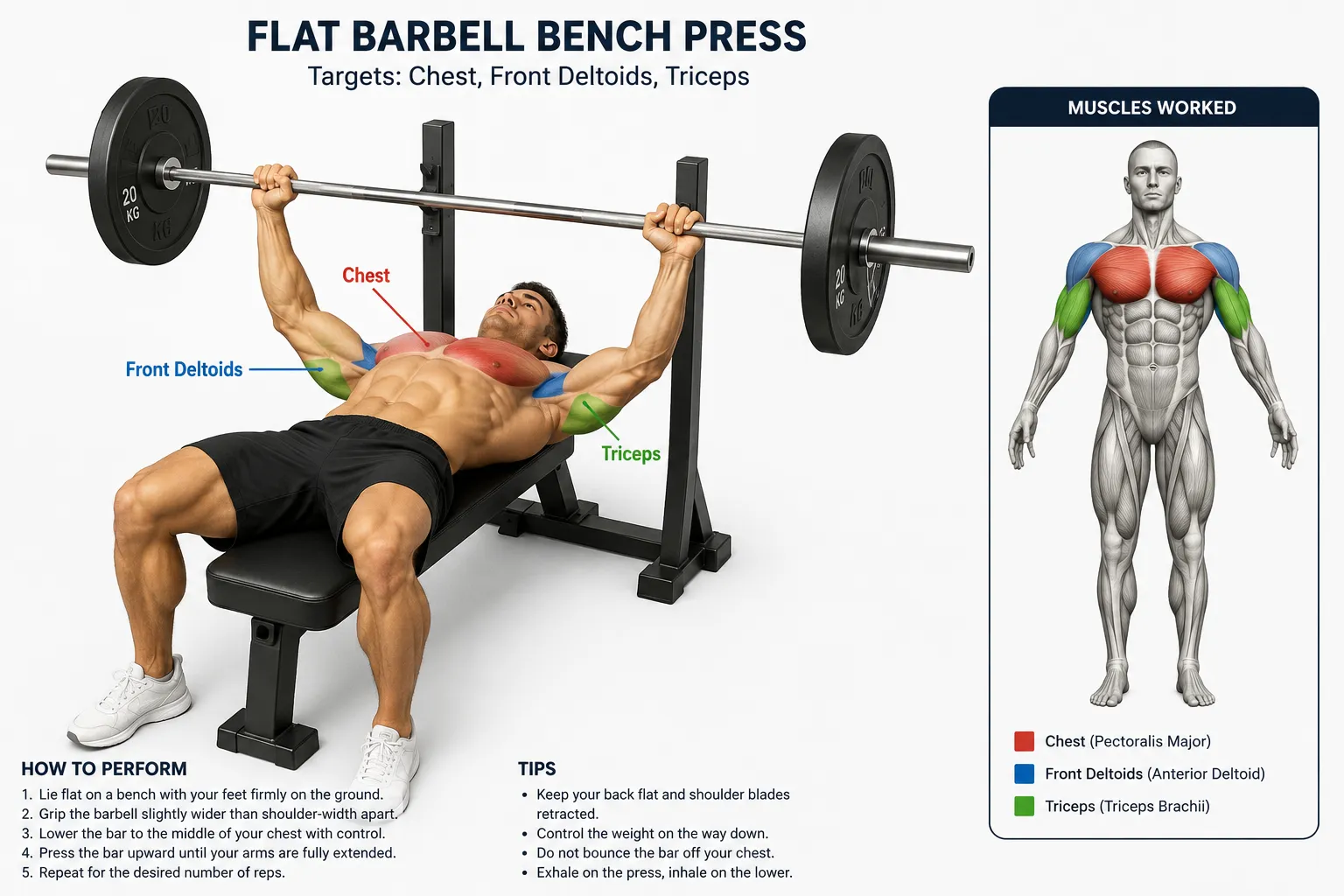
Flat Bench Press
Main target muscles: Lower and middle chest (sternal head of the pectoralis major), front deltoids, and triceps.
Strength potential: It provides the capability to lift the largest loads, which promotes mass gain.
Useful for: Overall development of the chest, gaining pressing strength, and creating the basis for mass development.
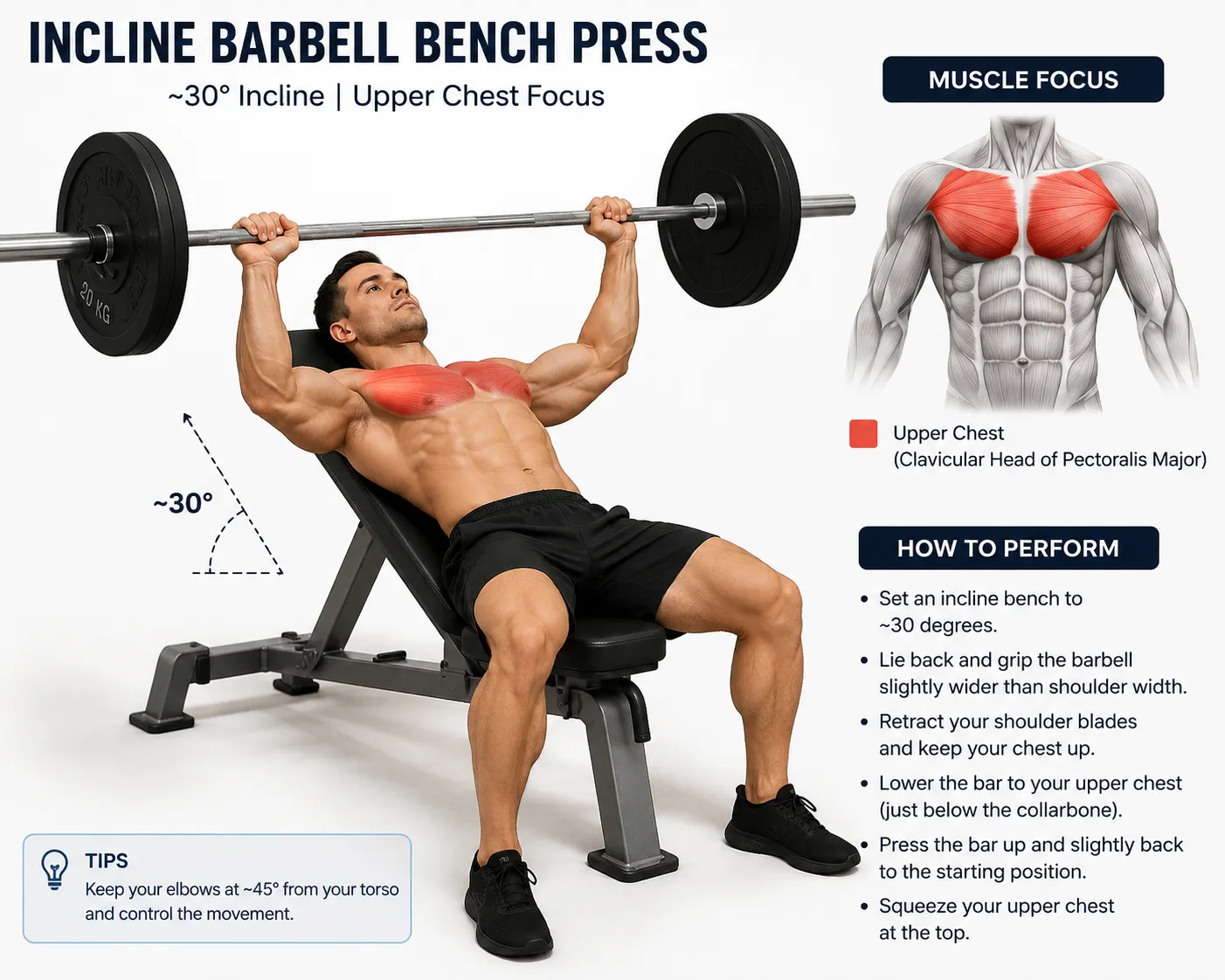
Incline Bench Press
Main target muscles: Upper chest (clavicular head of the pectoralis major), front deltoids, and triceps.
Advantage in muscle activation: As proved by multiple studies, incline bench press provides 30-45% more muscle activation of the upper pecs compared to the flat one, especially when the angle is 30-45 degrees.
Useful for: Upper chest development and having a complete look of the upper body.
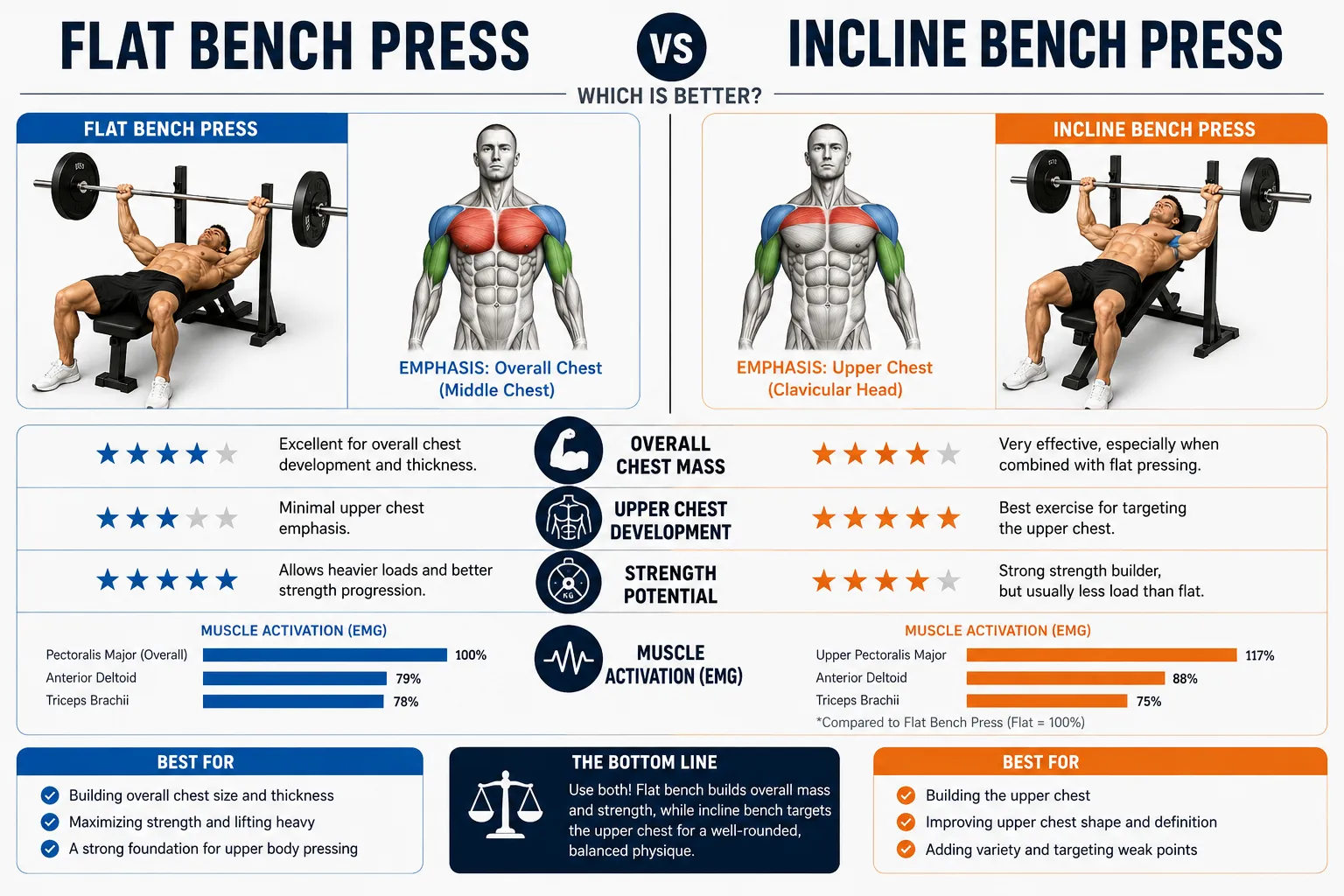
Which Type of Exercise Should You Choose to Develop Your Chest Muscles?
It depends on your goals:
Mass and strength development: Flat bench press works better. It provides the highest volume-load, which is a main factor of muscle growth.
Upper chest muscle development: An incline bench press is a better choice. Studies showed that there are more gains in the upper pec mass in people who perform only incline bench press.
In one study it was shown that there are about 0.6 cm gain in the height of the upper chest muscle in an incline bench press-only group in comparison with a flat-only group within the same period of time, while mid and lower pec muscle gains are similar.
The Ideal Angle of Incline Bench Press for the Upper Chest Development
Based on studies and practical experience, the moderate incline is the optimal variant:
Optimal range: The angle about 30-45 degrees provides the highest upper pec activation without excessive shoulder overload.
Steep angle (>45°): Too many muscles are activated from the front deltoid side, which leads to less chest activation.
Flat angle (<15°): The exercise becomes too similar to a flat bench press and loses its pecs' peculiarity.
Most often, you can regard a position from 15 to 30 degrees as the best compromise when you aim at upper-chest development.
[Image suggestion: Incline bench press angle guide showing 15°, 30°, 45°, and 60° positions with the upper chest and front deltoid activation areas]
How to Combine Them in One Workout?
You should not make a choice once and forever. It would be wiser to use both to gain the best result:
Split for Strength and Hypertrophy
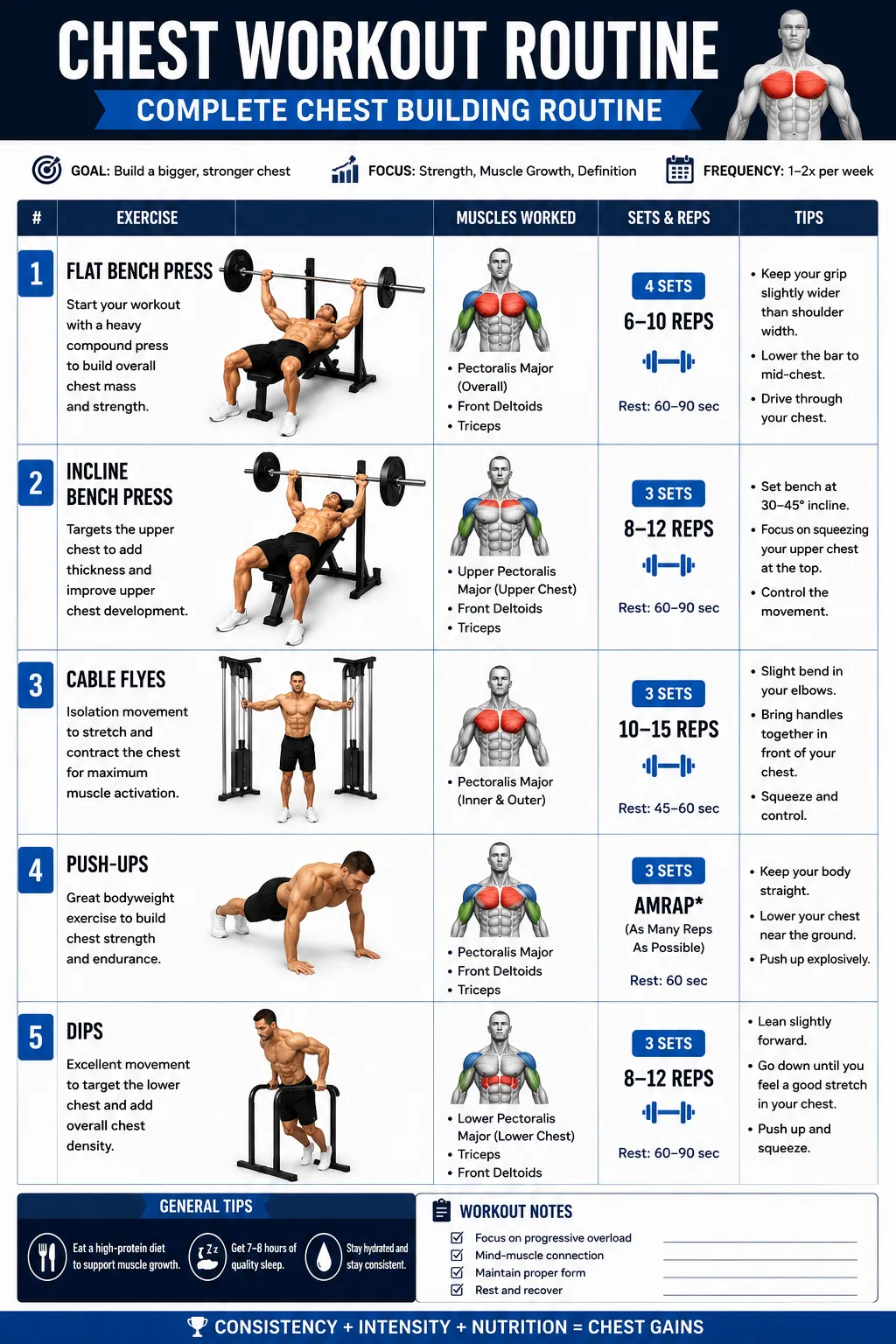
The first day (strength training): Flat barbell bench press – 3-5 sets of 3-6 reps for the strength and mass gain.
The second day (hypertrophy): Incline dumbbell or barbell press – 3-4 sets of 8-12 reps for the upper pecs' development.
Same-day chest muscle builder
Main exercise: Flat bench press – 4 sets of 5-8 reps.
Secondary exercise: Incline press (barbell or dumbbells) – 3 sets of 8-12 reps.
Also, you may perform cable flyes, push-ups, or dips targeting different angles.
So, you will be able to develop your strength and mass with a flat press and target your upper-chest with an incline one.
Common Mistakes in Using Flat and Incline Bench Press
Excessive incline angle: You should keep the angle within the range of 30-45 degrees to engage your pecs properly.
Neglecting the flat bench press: You will not be able to develop enough muscle mass and strength of your pecs without it.
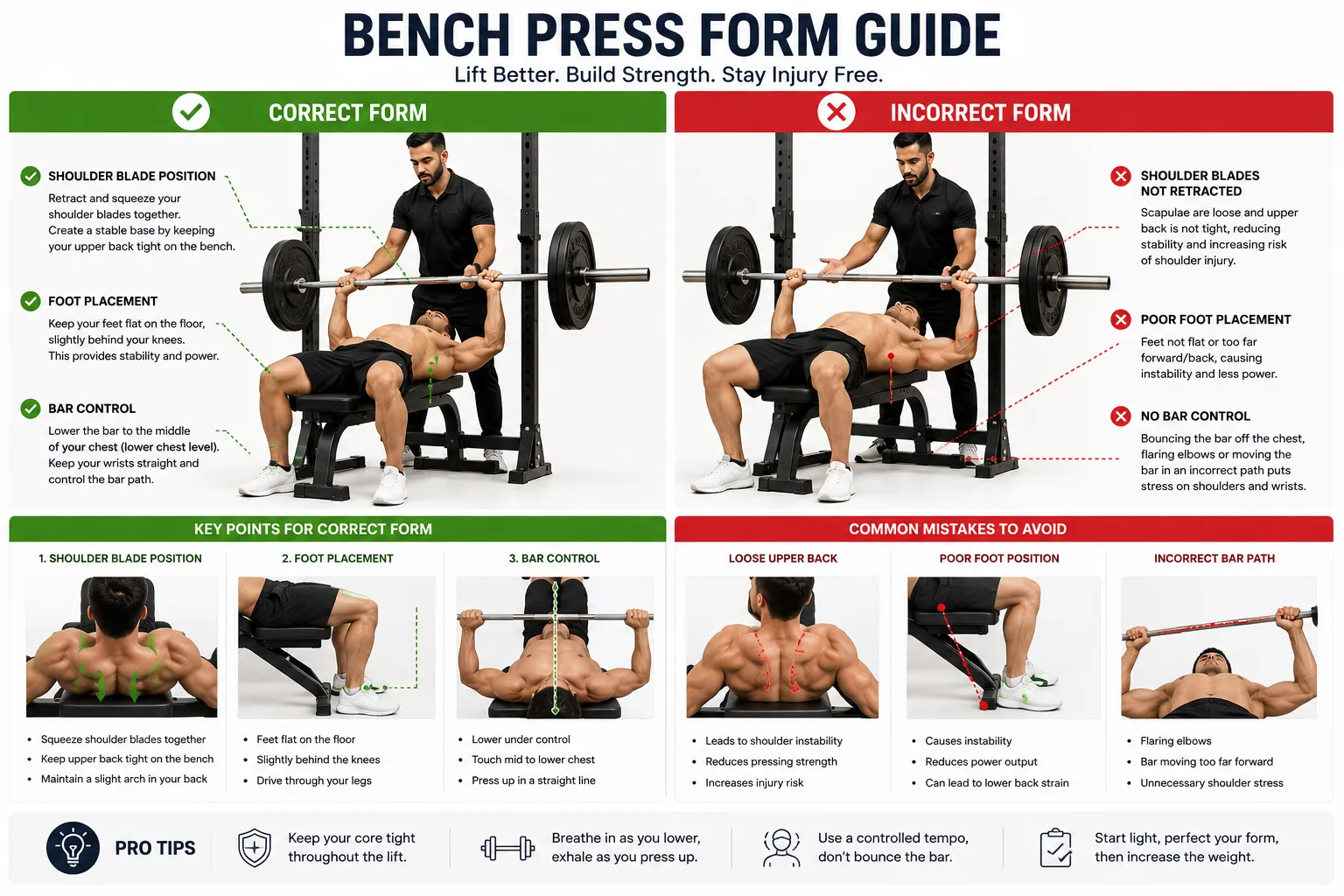
Improper technique: Keep your shoulder blades back, keep your feet well-grounded, and control the movement of the bar.
Conclusion
Flat bench press: Optimal for overall chest muscle mass and strength and middle and lower pec development.
Incline bench press: Best for upper pec mass gain and balanced development.
Optimal strategy: Use both exercises. Prioritize flat bench for heavy loading and incline for upper-chest development and adjust the volume according to your weaknesses.
If you have weak upper chest development, then increase the volume of your incline pressing workouts. If you want to lift heavy and develop a strong chest, then prefer the flat bench press and supplement it with incline ones.